
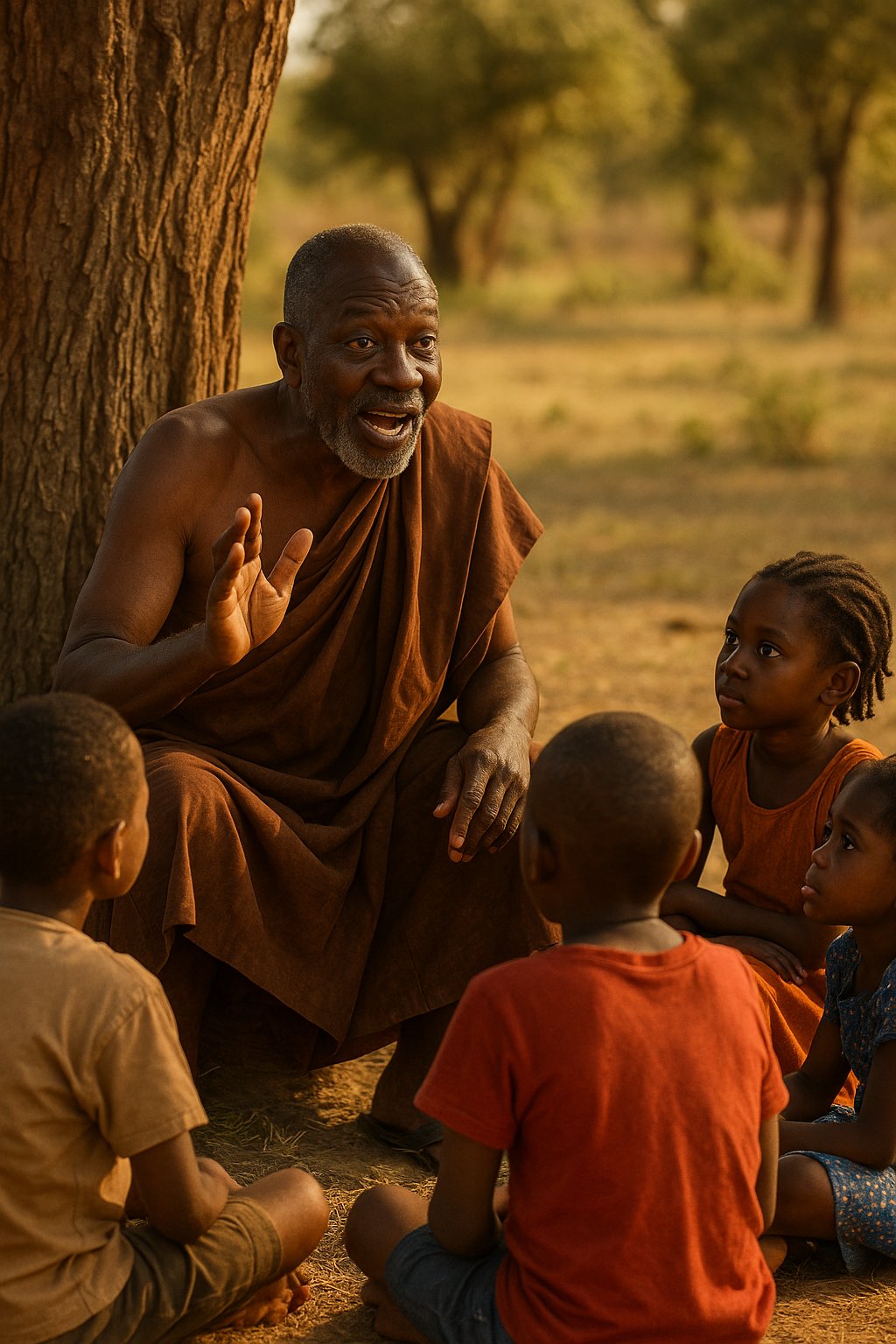
🗣️ Introduction to Oral Narratives
An oral narrative is a form of oral literature that tells a story passed from one generation to another through word of mouth.
These stories reflect the beliefs, traditions, and values of a community. They are used to entertain, teach moral lessons, and preserve culture.
🌟 Characteristics of Oral Narratives
- Moral Lesson – Every oral narrative teaches a lesson or moral value such as honesty, hard work, or kindness.
- Use of Repetition – Phrases and lines are repeated for rhythm, emphasis, and easy memorization.
- Use of Dialogue – Characters speak directly to one another, creating drama and interest.
- Opening Formula – The story begins with phrases like “Once upon a time” or “Long ago”.
- Closing Formula – Ends with phrases like “That is how my story ends”.
- Use of Songs – Songs add entertainment and help emphasize key moments.
- Personification – Animals or objects are given human qualities such as talking or reasoning.
- Timelessness – The stories are not tied to a specific time, making them universal and ageless.
🧩 Types of Oral Narratives
1. Trickster Narratives
These stories feature a clever character who outsmarts others. Usually, a small animal like the hare tricks a bigger one like the hyena.
Example: The Hare and the Hyena.
2. Ogre or Monster Narratives
In these stories, a human being encounters an ogre — a cruel creature that harms or eats people.
The ogre is often defeated through wisdom, bravery, or magic.
Example: The Girl and the Ogre.
3. Legends
Legends are stories about heroes or famous people believed to have lived in the past.
They explain important events or origins of communities.
Example: The Legend of Lwanda Magere.
4. Dilemma Narratives
These are stories that end with a moral puzzle or difficult choice, allowing the audience to decide the correct solution.
Example: The Man, His Mother, and His Wife.
5. Aetiological (Explanatory) Narratives
These explain the origin or cause of something — a custom, an animal’s feature, or a natural occurrence.
Example: Why the Tortoise Has a Cracked Shell.
6. Myths
Myths explain the creation of the world or natural phenomena and often feature gods, spirits, or supernatural beings.
Example: How the Sun and Moon Came to Live in the Sky.